
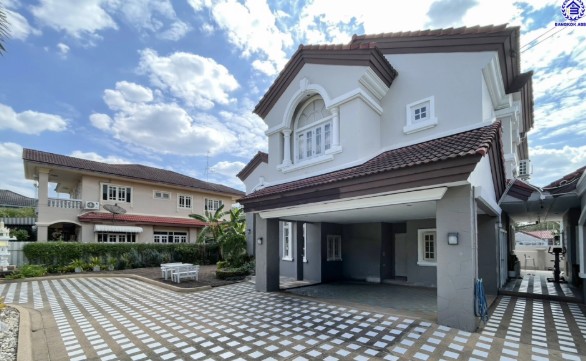
Many buyers begin their home search with a target price or an estimate of how much they may be able to borrow. However, borrowing capacity is not the same as long-term affordability. A realistic home-buying budget must account for the costs that arise before the purchase, during the transaction, and throughout the years of ownership.
For families considering a detached home purchase in Thailand, the goal should not be to spend the maximum amount available. It should be to choose a property that can be owned, maintained, and enjoyed without placing excessive pressure on household finances.
Begin With the Household’s Financial Position
A practical budget starts with a review of net income, existing debt, regular living expenses, savings, and income stability. There is no single formula that suits every household because financial responsibilities vary.
A family raising children may need to preserve room for education and childcare, while a household supporting elderly relatives may face different medical and caregiving costs. Buyers with variable income may also require a larger financial cushion than those with more predictable earnings.
The purchase should leave enough flexibility for saving, emergencies, and other long-term goals. A home that absorbs nearly every available resource may become difficult to manage even when the initial loan appears affordable.
Do Not Treat the Maximum Loan as the Budget
Mortgage preparation can help buyers understand the price range they may be able to consider, but a preliminary assessment is not a promise of final approval. A lender may still review income, debt obligations, supporting documents, the property valuation, and other conditions before confirming the loan.
The maximum amount a lender may offer should not automatically become the household’s spending target. Monthly repayments must sit alongside utilities, transport, maintenance, insurance, and the ordinary costs of family life.
Buyers should discuss lending terms, documentation, and related expenses with the relevant financial institution. They should also avoid committing all available savings before the financing process and property assessment are complete.
Include the Costs of Completing the Purchase
The asking price is only one part of the transaction. A complete budget may also need to account for property valuation, document checks, bank administration, insurance, transfer-related expenses, taxes or duties, and professional services.
The amounts and payment responsibilities can differ according to the property, the buyer and seller, the financing arrangement, and the contract. Buyers should therefore confirm the relevant costs rather than relying on general assumptions.
Property documents should also be reviewed alongside the budget. Ownership details, land boundaries, buildings and equipment included in the sale, community charges, obligations, and contractual terms may all affect the financial commitment. Independent legal or property advice may be appropriate when details are unclear.
Budget for a Proper Property Inspection
A personal viewing can reveal visible issues, but it cannot confirm the condition of the structure or the safety of technical systems. Buyers should observe the roof, walls, cracks, dampness, electrical fittings, plumbing, drainage, doors, windows, air-conditioning units, and equipment included in the sale.
When unusual cracking, repeated moisture, exposed wiring, poor drainage, or signs of previous repairs appear, a qualified engineer, electrician, plumber, or home inspector may be needed.
The cost of professional inspection should be treated as part of the purchase process rather than an optional extra. Identifying concerns before completion can help buyers estimate repairs and decide whether the property still fits the budget.
A Lower Price Can Carry Higher Costs
A house with a lower asking price is not always the more affordable choice. Roofing repairs, electrical upgrades, plumbing work, drainage improvements, painting, flooring, or replacement air conditioners can add significantly to the amount required after purchase.
Buyers may also need furniture, appliances, curtains, storage, kitchen improvements, or security equipment. A home intended for children, elderly relatives, or remote work could require further adjustments.
A slightly more expensive property in stronger condition may involve fewer immediate expenses and less disruption. Comparing homes by total cost rather than asking price alone provides a more realistic view of affordability.
Calculate the Ongoing Cost of a Detached Home
The financial responsibility continues after the family moves in. Utilities, garden care, community charges, security, insurance, routine maintenance, and emergency repairs should all be considered.
A detached house with more interior and outdoor space may require greater spending on cooling, lighting, cleaning, landscaping, and equipment maintenance. Water pumps, electrical systems, air conditioners, roofs, and drainage systems may need servicing or replacement over time.
These costs do not make a larger home unsuitable, but they should be anticipated. The household budget needs enough room to maintain the property without reducing spending on essential family needs.
Treat Commuting as a Housing Cost
Location can make an apparently affordable home more expensive to live in. A property located far from workplaces, schools, hospitals, shopping centers, main roads, expressways, or public transport may increase regular travel expenses.
Buyers should assess the real journeys made by every family member rather than relying only on distance shown on a map. Fuel, tolls, fares, parking, and the time spent travelling all form part of the wider financial picture.
A larger suburban home may provide more space and privacy, but its value to the household depends partly on whether daily travel remains practical and manageable.
Compare Affordability in Nonthaburi
Nonthaburi includes detached homes in established neighborhoods and planned developments at different price levels and in varying physical condition. Buyers can compare purchase cost, usable space, road access, repair needs, and long-term maintenance across a broad range of choices.
When reviewing affordable detached homes in Nonthaburi, affordability should not mean selecting the property with the lowest advertised price. It should mean finding a home whose total cost fits the household’s income, responsibilities, travel needs, and ability to maintain the property over time.
A lower-priced house requiring extensive repairs may be less manageable than a better-maintained home with a higher initial cost. Each option should therefore be measured through the same complete budget.
Keep Savings Available After the Purchase
Buyers should avoid using all their savings for the down payment, transaction, and decoration. Unexpected expenses may appear soon after moving in, even when the property has been inspected carefully.
A reserve can help cover urgent repairs, equipment replacement, additional documentation, or a temporary interruption in income. It can also reduce the need to rely on expensive short-term borrowing when something goes wrong.
Financial readiness means being prepared not only to complete the purchase, but also to remain stable after becoming a homeowner.
Choose a Budget That Supports Family Life
A realistic budget for a detached home purchase in Thailand is not defined only by the price a buyer can pay or the mortgage for which they may qualify. It must include the deposit, transaction expenses, inspection, repairs, furnishing, maintenance, travel, and emergency reserves.
The right budget should allow the family to own the home while continuing to save, meet everyday responsibilities, and respond to unexpected costs. By comparing properties through their total financial impact, buyers can make a decision that supports both the household’s living needs and its long-term financial health.


